




If you are planning to insulate your home, you have likely encountered the term R-value more times than you can count.
It’s one of the most important things to know before deciding on the type of insulation, especially if you are considering spray foam, fibreglass, cellulose, or mineral wool.
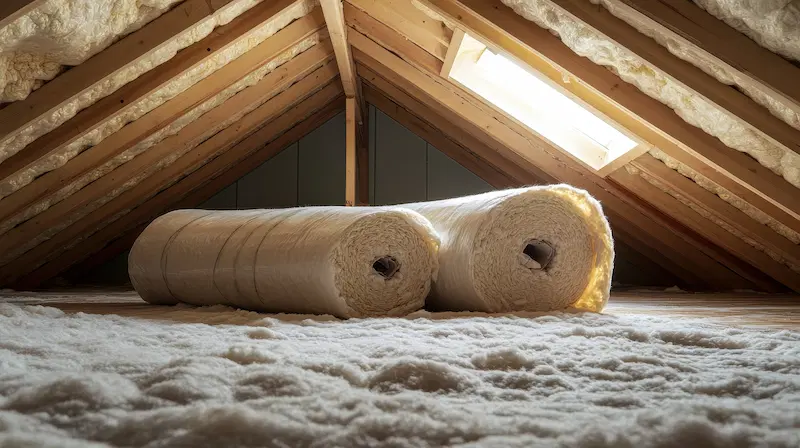
But what does R-value really mean, and how does spray foam insulation compare?
- Closed-cell spray foam offers one of the highest R-values per inch, typically R-6 to R-7 per inch.
- Open-cell spray foam is slightly lower, around R-3.5 to R-4 per inch.
- For comparison, fibreglass batts usually range from R-2.9 to R-3.8 per inch, while cellulose insulation averages R-3.2 to R-3.8 per inch.
This means closed-cell spray foam delivers nearly double the insulating power of fibreglass per inch of thickness. It creates an airtight, moisture-resistant barrier that helps Canadian homes stay warmer in winter and cooler in summer, saving money on heating and cooling bills all year round.
Now let’s break it all down in more detail, including how R-values work, where spray foam fits on the insulation chart, and what R-value you actually need in your part of Canada.
R-Value Explained: Why is it Important?
R-value is a measure of thermal resistance, or how well a material resists the flow of heat. Higher R-values usually mean better insulation performance. In Canada’s cold climate, R-value isn’t just a technical specification; it’s the difference between a home that stays cozy and one that leaks heat and money.

Here’s a simple rule of thumb:
- Higher R-value = better insulation performance
- Thicker insulation = higher R-value
- Better air sealing = more effective use of R-value
However, not all R-values are created equal. Two different materials could have the same R-value, but if one allows drafts or moisture to penetrate, it is not as efficient in actual conditions. This is where spray foam excels—it combines high R-value with an airtight seal.
Typical R-Values for Common Insulation Types
Understanding R-value performance for each material is critical when choosing insulation products.
Different insulation types like spray foam, fibreglass, cellulose, and mineral wool offer varying levels of thermal resistance, air sealing, and moisture protection.
The chart below provides a quick comparison of typical R-values per inch, allowing you to see how spray foam compares to other insulation options commonly used in Canadian homes.
| Type of Insulation | R-Value per Inch | Air Seal | Moisture Resistance | Ideal Usage |
| Closed-Cell Spray Foam | R-6.0 – R-7.0 | Excellent | Excellent (water barrier) | Walls, ceilings, and foundation |
| Open-Cell Spray Foam | R-3.5 – R-4.0 | Excellent | Moderate (air barrier only) | Attics, interior walls |
| Fibreglass batts | R-2.9 – R-3.8 | Poor | Poor | Attics and walls |
| Blown-in cellulose | R-3.2 – R-3.8 | Good | Excellent (water resistant) | Attics and walls |
| Mineral wool (Rockwool) | R-3.3 – R-4.2 | Good | Excellent | Basements, walls, attics |
| Rigid Foam Board (polyiso) | R-5.6 – R-6.5 | Good | Excellent | Exterior walls, roofs |
Closed-cell spray foam insulation has the highest R-value of any mainstream material, making it a top choice for homeowners looking for premium efficiency and air sealing.
It functions similarly to a vapour barrier. It provides insulation and locks out air and moisture, preventing drafts, mould, and condensation. This is the reason for its popularity in areas exposed to the elements, like basements or rim joists in colder regions of Canada.
On the other hand, open-cell spray foam is more flexible and softer. It is also good for soundproofing.
It is ideal to use when air sealing is necessary but moisture control is less critical, such as in attic rafters or interior partitions.
What R-Value Does Your Home Need in Canada?
Canada’s building code requirements vary by province and climate zone. Generally, colder regions like Alberta, Manitoba, and the Prairies require higher R-values than milder coastal provinces like British Columbia.
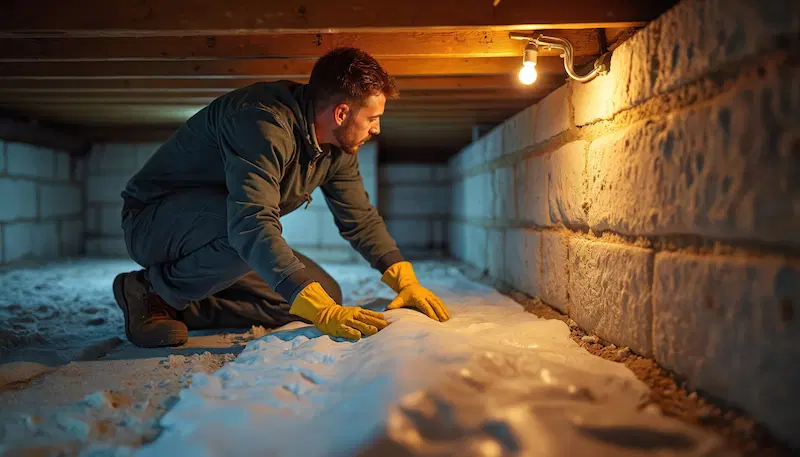
Refer to the quick guide below for recommended R-values for Canadian homes:
Part of Home | Recommended R-Value | Average Insulation Thickness |
Attic/Roof | R-50 to R-60 | 8 to 10 inches |
Exterior Walls | R-20 to R-25 | 3 to 4 inches |
Basement Walls | R-12 to R-20 | 2 to 3 inches |
Rim Joists | R-10 to R-20 | 2 to 3 inches |
Floors above the crawl space | R-20 | 3 inches |
**The values indicated above are approximate and can vary based on local building codes and building conditions.
If you’re unsure of the right R-value for your home, consult an insulation contractor to assess your space and climate zone. He can recommend the right product and thickness to get the best results.
Fill out the form on this page to connect with reputable insulation contractors in your area at no cost.
How Spray Foam Improves Insulation Performance
Many homeowners mistakenly believe that insulation performance relies only on R-value. In reality, air leaks, humidity, and the quality of installation all affect insulation performance.
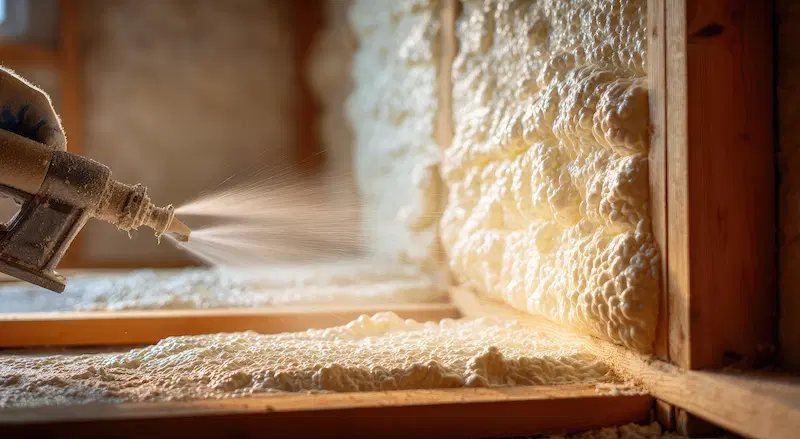
Spray foam’s advantage lies in its airtight seal. Unlike fibreglass or cellulose, which can shift, settle, or allow drafts through gaps, spray foam expands to fill even the smallest cracks.
This means:
- No air infiltration
- Consistent thermal protection
- Reduced strain on HVAC systems
- Better indoor comfort all year round
You can think of it as wrapping your home in a seamless thermal blanket.
So while R-value matters a lot, what really counts is how insulation performs day after day. Spray foam delivers both the high R-value and the airtight seal, ensuring your comfort and generating energy savings that cheaper materials cannot provide.
Understanding Effective R-Value
Even though two materials may have the same nominal R-value, their effective R-value in real-life conditions can differ drastically.
For instance:
- Fibreglass with R-3.5 per inch can lose up to 30% of effectiveness if air leaks are present.
- Closed-cell spray foam retains nearly 100% of its rated R-value because it seals air and moisture.
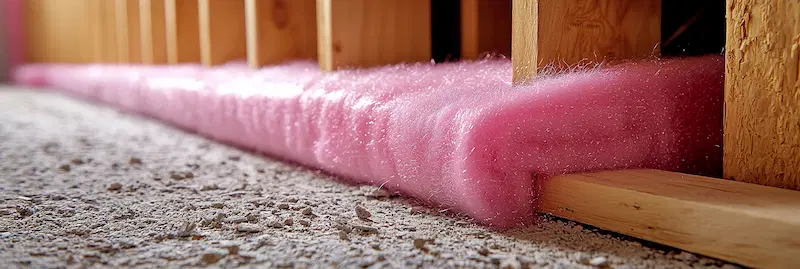
So while R-6 spray foam and R-6 fibreglass may look equal on paper, the actual performance of spray foam in your home will be significantly higher.
Spray Foam vs. Other Insulation Types in Canada
1. Spray Foam vs. Fibreglass
Fibreglass is affordable and easy to install, but it’s prone to gaps and air leaks. It also loses R-value when it gets damp. Spray foam, while pricier upfront, seals and insulates in one step and lasts much longer.
2. Spray Foam vs. Cellulose
Cellulose is eco-friendly and provides a decent R-value, but it can settle over time, reducing its performance. Spray foam doesn’t settle and resists moisture.
3. Spray Foam vs. Rockwool
Rockwool (mineral wool) is effective for fire resistance and soundproofing. However, its R-value per inch is lower. Many contractors use spray foam in combination with Rockwool for a balanced system.

Cost of Spray Foam Insulation in Canada
Cost is the biggest reason why homeowners hesitate about using spray foam insulation, but it is important to consider it as a long-term investment.
Here are the average costs of spray foam insulation:
Type of Spray Foam | Average Cost with installation | R-value Per Inch | Typical Uses |
Open-cell spray foam | $1.50 – $2.50 per square foot | R-3.5 – R-4 | Attics, ceilings |
Closed-cell spray foam | $2.50 – $4.50 per square foot | R-6 – R-7 | Walls, basements, crawl spaces |
Spray foam insulation has a higher upfront cost than fibreglass or cellulose insulation. However, it can cut energy bills by 20–40% yearly and last over 50 years. In a few years, the cost of installing spray foam insulation would be offset by energy savings while you continue to benefit from its excellent performance.
When to Use Spray Foam
Spray foam is not always ideal for every insulation project but it does shine in specific applications:
- Renovations or new builds where walls are open
- Basements or crawl spaces which are prone to moisture
- Cathedral ceilings or rim joists with hard-to-reach cavities
- Air sealing around ducts, pipes, or rim areas
For large attic retrofits or cost-sensitive projects, blown-in cellulose or fibreglass may still be good options, but combining them with a few inches of spray foam in key areas can provide the best results.
Can You Mix Insulation Types?
Yes, hybrid systems are common in Canada. Many contractors apply a thin layer of closed-cell spray foam to seal air and moisture, then add fibreglass or cellulose for additional R-value at a lower cost.
For Example:
- 1 inch of closed-cell foam (R-6.5) + 5 inches of fibreglass (R-17) = Total R-Value of R-23.5, but with airtight protection.
This combination offers an optimal balance of cost and performance.
It is advisable to consult a reputable insulation contractor for expert advice tailored to your home, ensuring you get the best possible price.
To connect with our insulation partners in your city, just fill out the short online form on this page with NO OBLIGATION.
What is your Home’s Current R-Value?
Does your home feel drafty? Do rooms have varying temperatures? It is possible that your insulation is not at par with recommended R-values.
You can check your home’s current R-value by:
- 1. Inspecting attic or crawl spaces – measure the insulation thickness.
- 2. Comparing your region’s R-value recommendations.
- 3. Using a thermal camera or energy audit to identify heat loss areas.
If your home falls below recommended levels, upgrading to spray foam can dramatically improve comfort and efficiency.
Get Free Quotes for Spray Foam Insulation
Before starting your insulation project, it’s worth comparing quotes from qualified spray foam installers in your area. Prices can vary depending on:
- Home size and accessibility
- Local labour rates
- Thickness and R-value required
- Type of spray foam used
To make it easier, compare free quotes from local insulation contractors in your area using our short online form. It’s fast, obligation-free, and helps ensure you’re getting the best value for your money.