




If you are planning to insulate your home, especially your attic or under-roof space, one of the key questions you want answered is: how much will it cost?
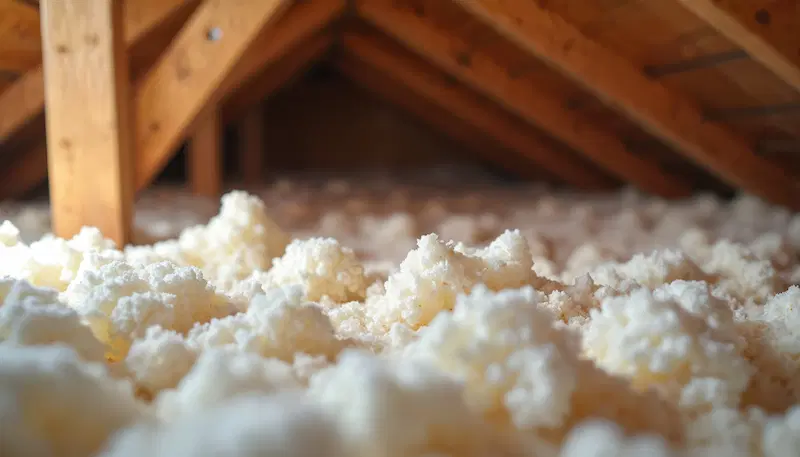
Expect to pay around $2.00 to $3.00 per square foot installed, or roughly $2,000 to $3,500 for a typical 1,000-sq-ft attic. Simple jobs with good access could cost as little as $1.50 to $2.50 per sq. ft. , while complex retrofits or higher R-value targets (like R-60) can reach $3.50 to $4.00 per sq. ft.
These prices are for materials and labour, but they can vary depending on the size of your attic, your choice of contractor, and the scope of the work.
We are outlining the factors that drive these costs, the pros and cons of cellulose, and how to get the best value when requesting quotes in Alberta.
To take advantage of our free insulation quotes, simply fill out our short online form on this page.
Cellulose Insulation & its Benefits
If you are looking for an eco-friendly and cost-effective way to keep your home warm in winter and cool in summer, cellulose insulation is worth looking into.
Cellulose insulation is typically made of 85% recycled paper, such as old newspapers. It is also treated with fire retardants, providing it with excellent resistance to fire, pests, and mould. It is designed to be blown-in to wall cavities, floor or ceiling assemblies, and attics.
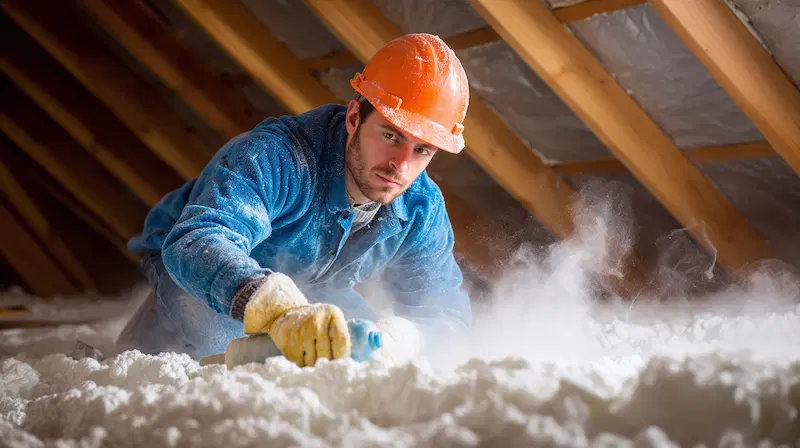
Cellulose is typically used in two ways:
- Blown-in loose-fill: loose cellulose is blown (via a hose) into attic spaces or into wall cavities (often after drilling access holes).
- Dense-pack / wet-spray: in retrofit situations, cavity walls may be filled with cellulose at a higher density, or sprayed in “wet” then dried.
Here are some of the advantages of using cellulose insulation in Alberta’s climate:
- Good thermal performance: Loose-fill cellulose offers good R-value per inch and fills gaps and irregular spaces. The concept of R-value (resistance to heat flow) is central—the higher the R-value, the better the insulation’s performance. It is environmentally friendly because it is made of recycled materials.
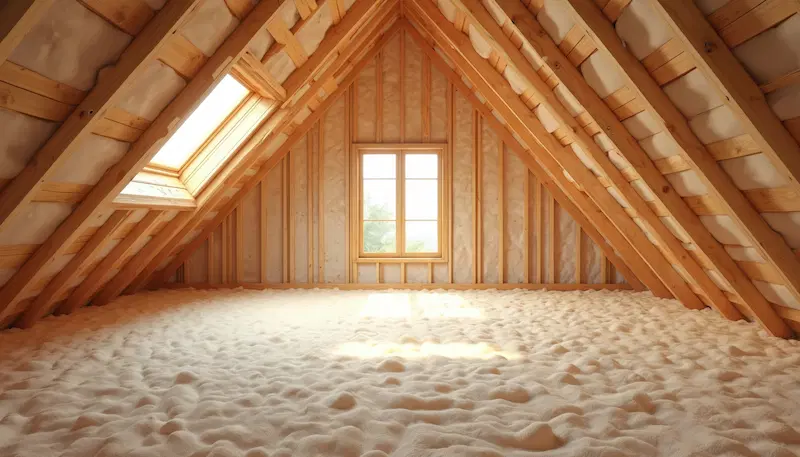
- Especially suited for attic retrofits: Many attic spaces are irregular, involve joists, wiring, old insulation, and more. Blown-in cellulose is ideal for this type of layout.
- Cost-effective for certain retrofit scenarios: In many Canadian homes, especially older ones, adding blown-in insulation can offer good value because you won’t have to rip everything out.
Why use Cellulose?
Aside from being green, cellulose insulation is also practical. It performs well in Alberta’s unpredictable climate, retaining heat during subzero winters and maintaining cooler indoor temperatures in summer.
Best of all, it is one of the more affordable insulation materials on the market, both in terms of installation and energy savings over time.
When Is Cellulose Not Ideal?
Cellulose is not ideal for all situations. It can absorb moisture, so it’ is not advisable for damp basements or areas with roof leaks. It may also settle slightly over time, which means installers should add a bit more depth to account for future compaction.
Typical costs of Cellulose Insulation in Alberta
Let us now get down to numbers: what are the realistic cost ranges for cellulose insulation in Alberta, especially for homes and attics?
Note that Alberta has some particularities (cold winters, high R-value standards, and variable home types), so the ranges are somewhat broader than the national average.

Alberta homeowners generally see quotes in these ranges:
Type of Job | Estimated Price (Installed) | Description |
Small attic with easy access | $1.50 – $2.50 | Minimal preparation and removal |
Standard attic | $2.00 – $3.00 | Most common |
Large or complex attic | $3.00 – $3.50 | Removal, air sealing, high R-value targets |
Whole-home dense-pack | $2.50 – $4.00 | Complete retrofits |
If your attic is about 1,200 sq ft:
- At $2.00 / sq. ft. : about $2,400
- At $3.00 / sq. ft.: about $3,600
- At $3.50 / sq. ft.: about $4,200
This estimate includes materials and labour. Very small jobs could be charged a minimum service fee of $1,000 – $1,500.
How Does Cellulose Compare with other Insulation Materials?
Choosing the right insulation is not only about price. You must also consider comfort, efficiency, and long-term value.
While cellulose is known for being eco-friendly and affordable, it is not the only option available to Alberta homeowners. Fibreglass, spray foam, and mineral wool each have their own strengths and trade-offs. Understanding how cellulose stacks up against these alternatives can help you decide which material best fits your home’s needs, budget, and energy goals.
Material | Average Cost (Installed) | R-Value per inch | Description |
Cellulose | $2.00 – $3.00 | R-3.6 – R- 3.8 | Eco-friendly, ideal for attics |
Fibreglass | $1.50 – $3.00 | R-2.5 – R-3.2 | Cheaper, less dense |
Spray Foam | $4.00 – $7.00 | R-6.0 – R-7 | Air seals and moisture barrier |
Rigid Foam | $3.00 – $5.00 | R-5 – R-6.5 | Popular for walls and roofs |
While spray foam gives the highest R-value, cellulose delivers relatively strong performance at a much lower cost, making it the best value option for attic upgrades.
Lifespan of Cellulose Insulation & When to Replace
One of the biggest advantages of cellulose insulation is its longevity. When properly installed and kept dry, cellulose insulation can last 20 to 30 years, or even longer. Its dense composition helps it stay in place for a long time, maintaining a consistent R-value and reducing drafts for many years.
However, its actual lifespan depends heavily on installation quality, ventilation, and moisture control. In Alberta’s cold winters and warm summers, temperature swings and humidity can affect attic conditions. If cellulose gets damp due to a leaking roof or condensation, it can settle, lose insulating power, and even promote mild mould growth if left untreated.
You may need to consider replacing or topping up your cellulose insulation if you notice these signs:
- Uneven temperatures between rooms or floors
- Higher heating or cooling bills despite no major lifestyle changes
- Drafts or cold spots near ceilings and walls
- Visible settling—the insulation level looks low or uneven in your attic
- Signs of moisture damage such as clumping or a musty odour
If your cellulose is more than 20 years old, it is advisable to schedule a professional inspection. Sometimes, you don’t need a full replacement; installers can just add new blown-in cellulose on top of the old layer to restore its R-value and performance.
To extend the life of your insulation, make sure your attic has proper ventilation and no roof leaks. Routine checks every few years go a long way in keeping cellulose effective for decades.
Energy Savings and Payback Period
Adding cellulose insulation to your attic is an investment that pays off over time.
- Homeowners in Alberta typically save 15 – 30% on annual heating costs after upgrading attic insulation.
- The payback period (time it takes for energy savings to cover the cost) is usually 3 – 5 years.
- Proper air sealing improves comfort and reduces drafts throughout the home.
In cold Alberta winters, a well-insulated attic can prevent ice damming and reduce furnace runtime.
Rebates and Incentives in Alberta
Depending on the timing and availability, some programs you may qualify for are:
- Canada Greener Homes Affordability Program (CGHAP): No-cost retrofits, including insulation for low to medium-income households.
- Municipal or utility rebates — check local power providers; some offer $0.20 – $0.40 per sq. ft. rebates for insulation.
- Tax credits or low-interest financing — available occasionally through provincial programs.
Always verify eligibility before the work starts, and keep receipts and photos for proof. Reputable contractors can also inform you of the latest available programs in your area.
Checklist before Hiring a Contractor
It is important to hire the right insulation contractor to get the right price, good workmanship, and more value for your investment.
- Measure your attic area (length × width).
- Check for roof leaks or damp insulation.
- Decide whether to remove old material.
- Get at least three quotes to compare costs based on square footage
- Confirm R-value, brand, and what’s included.
- Ask about warranty and settling guarantee.
- Look up reviews or BBB ratings
- Check rebate eligibility.
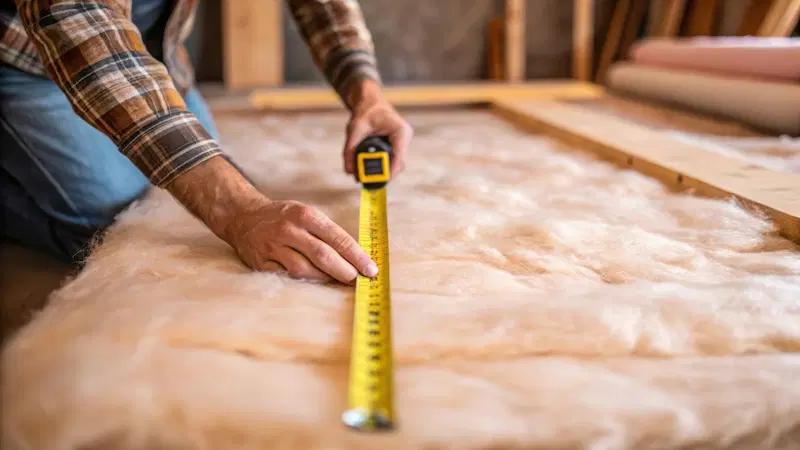
To start comparison of contractors and their rates, fill out the short online form on this page at no cost.
When Is the Best Time to Install Cellulose Insulation?
While you can technically install cellulose insulation any time of year, timing your project strategically can save you money and hassle—especially in Alberta’s unpredictable climate.
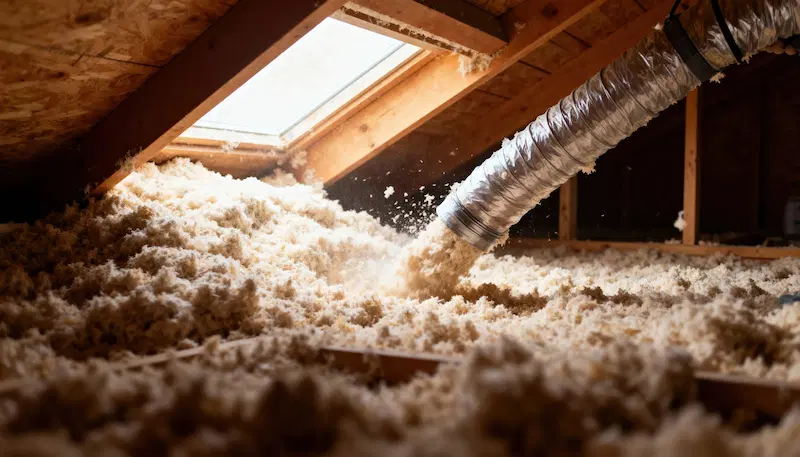
The best time to insulate is during the warmer months, from late spring to early fall. That’s when attics and crawl spaces are dry, making installation easier and more efficient. Contractors also tend to have more flexible schedules outside of the winter rush, and prices may be slightly lower since fewer emergency insulation jobs are happening.
If you’re planning a major renovation or new construction, it’s ideal to add cellulose insulation before drywall goes up. For attics or retrofits, choose a mild, dry day when humidity is low—cellulose performs best when installed in a moisture-free environment.
Avoid installing in extreme cold or damp conditions. When temperatures drop below freezing, it can be uncomfortable and less efficient for installers to work in attics. Dampness can also affect the quality of blown-in cellulose if the material absorbs moisture during application.
Many Alberta homeowners schedule insulation upgrades in early fall, just before the heating season kicks in. This allows them to be ready as soon as the first cold snap arrives.
What to Expect During Installation
A typical cellulose attic insulation job takes 3 – 6 hours. Here’s what happens:
- 1. Inspection and prep: Contractors check for leaks, damage, or pests.
- 2. Air sealing: They seal around light fixtures, vents, and pipes.
- 3. Setup: A hose is run from the truck into your attic.
- 4. Blowing cellulose: Technicians blow insulation evenly to the required depth.
- 5. Clean-up: Debris is vacuumed, and attic access is resealed.
You can stay home while the work is in progress, but it is advisable to keep children and pets away.
Compare Cellulose Insulation Costs with Free Quotes
As a smart homeowner, we know you want to get the best price for your home insulation project.
When you’re collecting free quotes for cellulose insulation:
- Use the typical cost range of ~$1.50-$3.00 per sq ft as a useful benchmark.
- Make sure you understand what each quote covers and excludes.
- Don’t just chase the lowest number: Focus on the completeness of the job and long-term value.
- Ask for scope, R-value target, existing insulation condition, and whether removal/air sealing is included.
- Make sure you’re comparing like-for-like across quotes.
By doing so, you’ll be in a much stronger position to choose the quote that offers the best value—not just the lowest price.
Fill out the short online form on this page today to start comparing competitive quotes, free of charge.