



While planning to insulate your Alberta home, you may have come across three common materials: cellulose, fibreglass, and Rockwool.
Each type has its own strengths in terms of warmth, energy efficiency, cost, and environmental impact. But how do you choose which one offers the best value for your home?
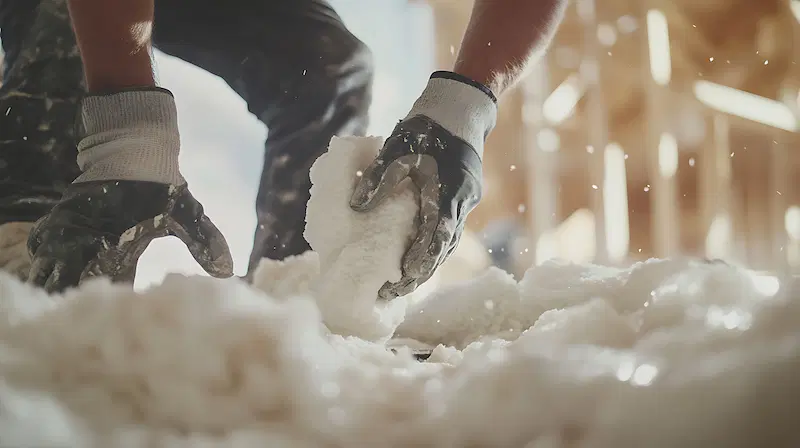
For most homes in Alberta, cellulose insulation offers the best all-around value in terms of cost, performance, and eco-friendliness, especially for attics and wall retrofits. It is made from recycled materials, offers excellent thermal performance, and resists air leaks well.
However, Fibreglass is still the most affordable and widely available choice, great for new builds or DIY projects. On the other hand, Rockwool (mineral wool) costs more, but offers superior soundproofing, fire resistance, and moisture control, making it ideal for basements, exterior walls, or homes near busy streets.
Ultimately, the right insulation depends on your home’s structure, energy goals, and budget. Let’s compare these three materials in depth so you can make an informed decision.
Any time you are ready, get FREE and NO-OBLIGATION QUOTES to compare simply by filling out the short online form on this page.
Understanding the Alberta Climate: Why Insulation Quality Matters
Before choosing the right insulation, it’s important to consider Alberta’s extreme temperature swings. Winters can plunge to -30°C or colder, while summers reach 30°C or more. That means your insulation has to do two roles: keep the heat in during winter and out during summer.

In addition, Alberta’s dry, windy conditions can cause air leaks and heat loss through cracks and poorly sealed areas. High-quality insulation helps regulate indoor temperature, lowers energy bills, and reduces the strain on your heating and cooling systems.
Whether you live in Calgary, Edmonton, Red Deer, or Lethbridge, a well-insulated home isn’t just about comfort—it’s about long-term savings and home efficiency.
What Is Cellulose Insulation?
When it comes to choosing insulation that is both eco-friendly and efficient, cellulose insulation is definitely a top contender you don’t want to overlook. Made mostly from recycled paper, it is treated with non-toxic fire retardants so it is safe and sustainable.
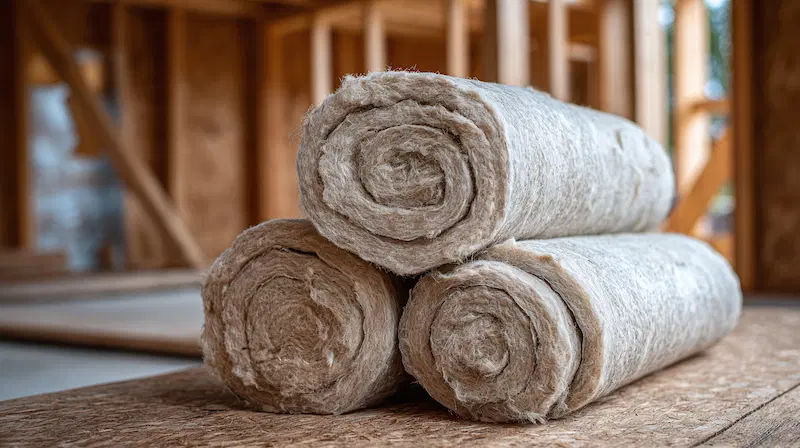
How does Cellulose Insulation Work
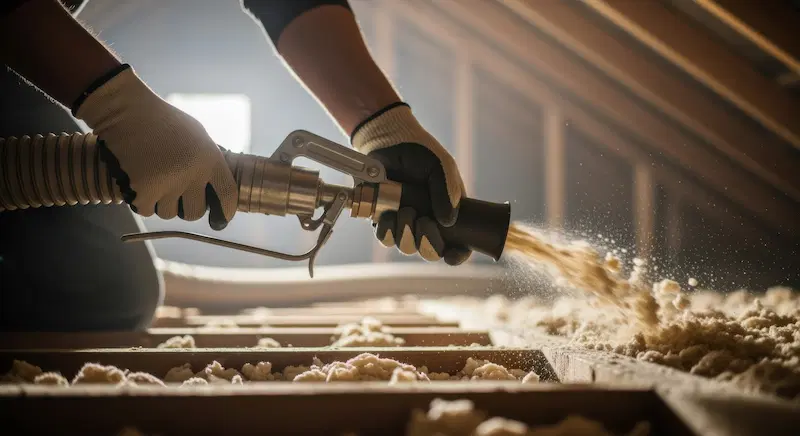
Cellulose is typically blown into walls, attics, or floors, where it forms a dense layer that fills cracks and gaps, reducing air leakage. This makes it particularly effective in older homes or retrofit projects.
Cellulose has an R-value of about R-3.2 to R-3.8 per inch, depending on installation. This is slightly higher than fibreglass and comparable to some types of rockwool.
How much does Cellulose Insulation Cost in Alberta?
Expect to pay around $1.70 to $2.50 per square foot installed, depending on the thickness and area. It’s more affordable than rockwool and roughly similar with blown fiberglass.
In Alberta you might reasonably expect somewhere around CAD $1.20 to CAD $2.50 per square foot installed for a typical attic or retrofit job using cellulose, though it could be higher depending on complexity, ease of access, R-value target, and other factors.
To get a clear idea of how much you need for your insulation project, request FREE QUOTES from reputable contractors using our short online form.
The Pros & Cons of Cellulose Insulation
Like any insulation material, cellulose has its strengths and limitations. It is popular among eco-conscious homeowners due to its sustainability and solid performance. However, it is not perfect for every situation. Here’s a quick look at the main advantages and drawbacks to help you decide if cellulose is right for your home.
Advantages:
- Made from up to 85% recycled paper ( environmentally friendly)
- Great at sealing air leaks
- Excellent sound absorption
- Fire-resistant and pest-resistant when treated
- Performs well in Alberta’s cold, dry climate
Disadvantages
- Can settle over time if not properly installed
- Sensitive to moisture if exposed
- Professional installation is recommended for best results
Cellulose insulation is idea for attic insulation (blown-in), wall cavities, and retrofits or upgrades in older homes.
It is a great choice for homeowners seeking comfort, sustainability, and good R-value performance without a high price tag.
What Is Fiberglass Insulation?
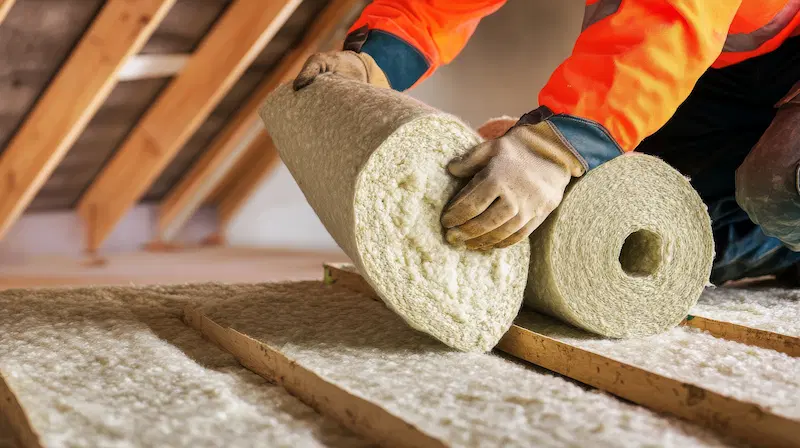
When most Canadians think of insulation, fibreglass is the first that comes to mind. It is made from fine strands of glass fibers bonded together to create batts, rolls, or loose-fill material. Fibreglass remains the most common and cost-effective insulation option across Alberta.
How It Works
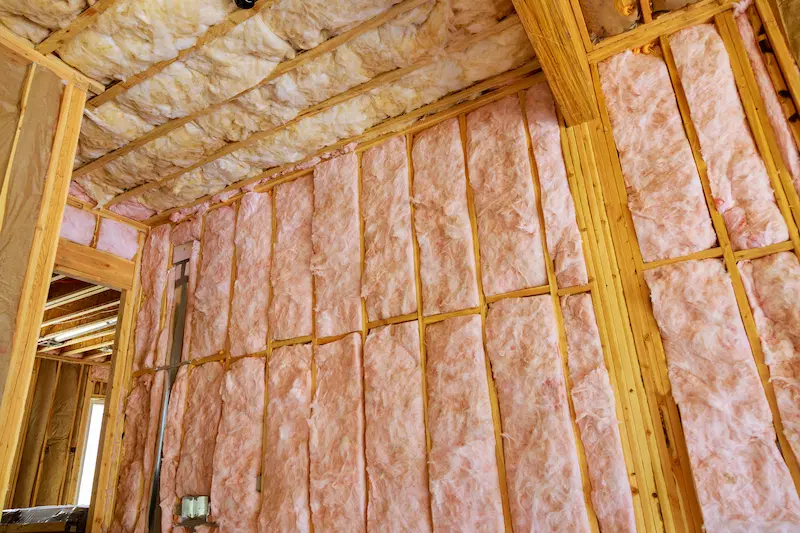
Fibreglass traps air pockets within its fibers, slowing down the transfer of heat. It comes in pre-cut batts for walls and attics, or as loose-fill that can be blown into hard-to-reach spaces.
Fibreglass offers R-value of about R-2.9 to R-3.7 per inch, depending on density and type. While slightly less efficient than cellulose or Rockwool, it is still sufficient for most residential needs if installed correctly.
The Cost of Fibreglass Insulation in Alberta
Fibreglass insulation remains one of the most affordable and widely used options for Alberta homeowners. Its cost-effectiveness and availability make it a popular choice for both new builds and retrofit projects.
However, prices can vary depending on the R-value, brand, and whether it’s blown-in or batt insulation.
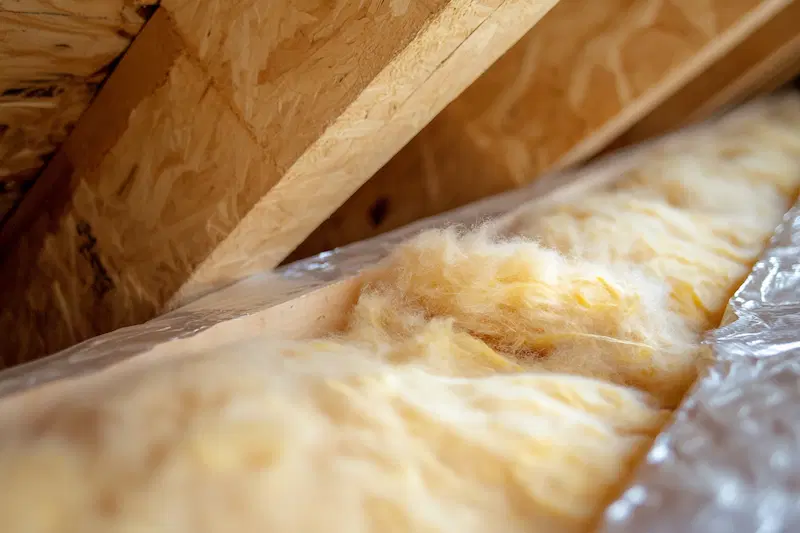
The average installed cost is about CAD $1.60 to CAD $2.00 per square foot but this can vary from one contractor to another.
Including labour, installation, and full attic or wall job, it could cost around $1.95 per sq. ft. or around CAD$1,750 for 900 sq. ft.
Factors such as access and prep work, seasonality, and whether old insulation needs to be removed are some of the factors that drive the cost up or down.
Feel free to request actual quotes for your insulation project using our short online form!
Sample Cost Scenarios for Fibreglass Insulation
To make this more concrete, here are sample scenarios in Alberta that can help you plan your budget.
Scenario A – Attic top-up in a 1,200 sq ft attic
If you are topping up existing insulation to reach a higher R-value like R-50, with moderate access and minimal removal of old materials:
At CAD $1.50 per square foot: 1,200 × $1.50 = CAD $1,800
At CAD $2.50 per square foot: 1,200 × $2.50 = CAD $3,000
Scenario B – Full attic insulation replacement / retrofit
If you are removing old insulation, sealing penetrations, installing hatch cover, and new ventilation, the cost could be higher.
At CAD $2.00-$3.00 per square foot: 1,000 sq. ft. costs CAD $2,000 to CAD $3,000+.
Scenario C – Wall cavity insulation in a mid-sized home
If you are insulating walls in a 2,000 sq. ft. home and covering around 1,000 sq. ft. of wall area
At CAD $1.60-$2.50 per sq ft: CAD $1,600 to CAD $2,500.
As you can see, the cost per square foot will directly affect the cost of your project. It is important to get the best price and value.
The best way to do this is to obtain multiple quotes free of charge and compare them to find the best deal.
Why Is Fibreglass Insulation worth the Cost?
Spending on quality fiberglass insulation for your home can be a smart investment because:
- With Alberta’s cold winters and hot summers, good insulation helps maintain comfortable indoor temperatures and reduce heating/cooling bills.
- Fiberglass, when properly installed, is a reliable, proven technology that has been used for decades.
- Compared to more expensive insulation types, fibreglass gives good performance for its cost, making it an effective choice for budget-conscious homeowners.
- By effectively improving air-sealing, vapour barriers, and depth, you can significantly improve home efficiency, comfort, and resale value.
Speak to our insulation partners to get the best insulation for your home. Fill out the short online form and receive NO COMMITMENT quotes.
What Is Rockwool Insulation?
If you want a premium insulation option, Rockwool (also known as mineral wool or stone wool) is a great choice.
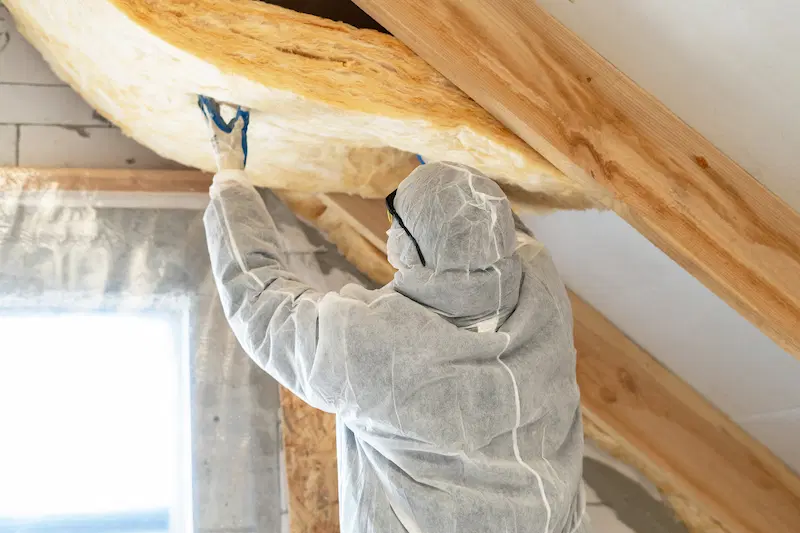
It is made from basalt rock and steel slag, which are spun into dense fibres. The result is a durable material with exceptional thermal, sound, and fire resistance qualities.
How does Rockwool Insulation Work?
Rockwool forms a dense, sponge-like structure that traps air efficiently while resisting water and fire. It is available in batts, boards, or loose-fill form, making it suitable for walls, floors, and roofs.
Rockwool provides an R-value of about R-3.7 to R-4.3 per inch, the highest R-value per inch among the three materials discussed.
How much does Rockwool Insulation Cost in Alberta?
Rockwool is more expensive, typically costing $2.50 to $4.00 per square foot installed. However, it is worth noting that it also delivers higher performance and durability.
The price will depend on the thickness, area, access, and whether existing insulation must be removed.
Sample Cost Scenarios for Rockwool Insulation
Here are example situations to help you see the potential cost to install Rockwool insulation:
Scenario A: Attic upgrade using Rockwool batts in a 1,000 sq. ft. attic
If you are replacing old insulation with Rockwool to get a higher R-value, with moderate access:
At CAD $2.50 per sq. ft.: CAD $2,500.
If more complex and labour rises to CAD $4.00 per sq. ft.: CAD $4,000.
Scenario B: Wall cavity insulation or basement walls using Rockwool boards in a 1,200 sq ft area:
Because walls tend to be more labour-intensive, the cost could rise to CAD $3.00–$4.00 per sq. ft.
Estimated Cost: CAD $3,600 to CAD $4,800.
These examples show that while Rockwool insulation typically costs more than fibreglass or cellulose, its superior soundproofing, moisture resistance, and fireproof qualities often justify the higher cost.
For homeowners planning a long-term upgrade, the extra upfront cost can translate to better comfort, safety, and energy efficiency over the years.
Choosing the Right Insulation for Your Home
When it comes to insulating your home in Alberta’s challenging climate, there’s no standard answer.
Each insulation type—cellulose, fibreglass, and Rockwool—offers unique strengths that cater to different needs, budgets, and preferences.
Cellulose insulation is the eco-friendly performer, ideal for homeowners who value sustainability and solid thermal performance. It is affordable and efficient, but it may need periodic top-ups over time.
Fibreglass insulation remains the most budget-friendly and widely available choice. It’s a dependable option for those who want solid energy efficiency without overspending.
Rockwool insulation (or mineral wool) is the high-end pick for long-term comfort and safety. Its fire resistance, moisture protection, and soundproofing make it worth the higher upfront cost for many Alberta homes.
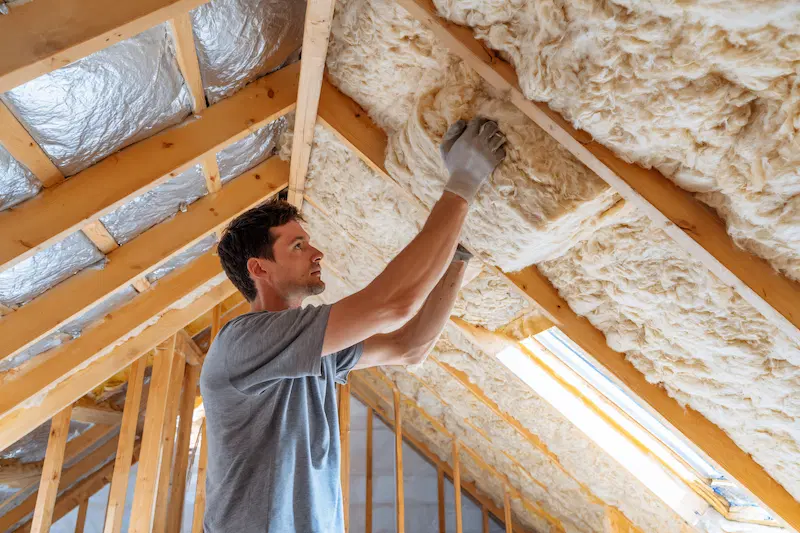
In the end, your best insulation choice depends on your budget, energy goals, and home structure. Attics, walls, and basements may each benefit from a different material. Thus, it’s advisable to discuss your options with a professional before deciding.
If you’re unsure where to start, get free, no-obligation quotes from trusted insulation contractors near you.
Comparing real prices in your area can help you balance cost, performance, and long-term value—and ensure your home stays warm, quiet, and energy-efficient all year round.
Fill out the short online form below to connect with the best insulation contractors in your area at no cost.